


For individuals facing thunderstorm phobia, a blend of hypnosis, Emotional Freedom Techniques (EFT), and Neuro-Linguistic Programming (NLP) offers a robust approach to managing this deep-seated fear. Hypnosis accesses the subconscious to tackle the roots of fear, EFT helps in stabilizing emotional responses, and NLP enables the restructuring of cognitive perceptions about storms. These combined therapies not only alleviate symptoms but also fundamentally transform one's response to storms, paving the way for lasting emotional resilience.
Key Takeaways
- Explore hypnosis to access and modify the subconscious roots of thunderstorm phobia.
- Utilize Emotional Freedom Techniques (EFT) to manage and reduce anxiety during storms.
- Adopt Neuro-Linguistic Programming (NLP) methods to reframe negative thoughts and emotions about thunderstorms.
- Combine these techniques to enhance overall emotional resilience and transform fear reactions.
- Gradually expose yourself to storm-related stimuli, using guided imagery and relaxation strategies for desensitization.
Understanding Thunderstorm Phobia and Its Impact
Thunderstorm phobia, clinically recognized as astraphobia, considerably impacts a broad demographic globally, manifesting through intense anxiety and panic triggered by the auditory and visual cues of storms.
The origins of this phobia may trace back to traumatic experiences during childhood storms or may be learned behaviors from parental reactions. Genetic predispositions can also play a role, suggesting a hereditary aspect in fear responses.
Common fear triggers include the sudden loud noises of thunder and the flashing of lightning, which unpredictably disrupt a person's sense of normalcy and safety.
Understanding these elements is essential for developing targeted therapeutic interventions.
Exploring Hypnosis for Deep-Seated Fear
While exploring the domain of hypnosis for addressing deep-seated fears, it becomes evident that this therapeutic approach offers a unique opportunity for individuals to investigate and understand the underlying causes of their phobias.
- Subconscious Exploration: Hypnosis provides access to the subconscious mind, revealing root causes of fear.
- Hypnosis Benefits: Enhanced relaxation, reduced anxiety, and a transformative perspective on fear.
- Guided Imagery: Techniques in hypnosis use vivid, calming visuals to reconstruct fearful perceptions.
- Empowerment: Individuals regain control, learning to manage reactions and emotions related to thunderstorms through self-guided hypnosis sessions, fostering resilience and confidence.
The Role of EFT in Emotional Management
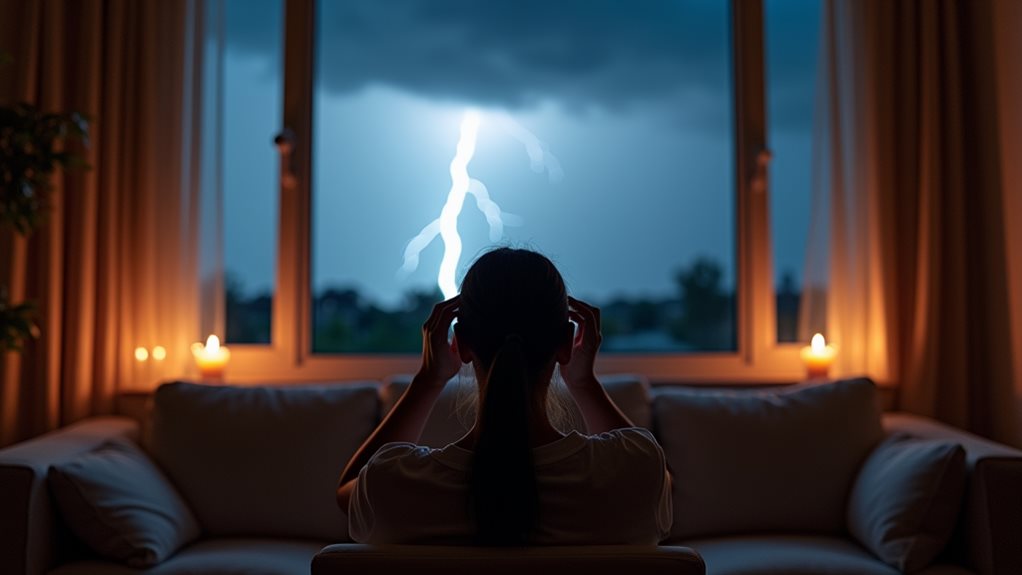
As Emotional Freedom Techniques (EFT) gain recognition in the therapeutic community, their role in managing emotional responses to phobias, including those triggered by thunderstorms, becomes increasingly significant.
EFT involves tapping on specific body points while focusing on distressing emotions. This practice purportedly rebalances the energy system, fostering emotional release and stability.
Research indicates that EFT benefits include reduced anxiety and increased calmness during stressful events.
How NLP Transforms Your Response to Thunderstorms
Neuro-Linguistic Programming (NLP) offers transformative strategies for those struggling with a fear of thunderstorms by reshaping their emotional and cognitive responses.
NLP techniques focus on emotional reframing, which alters the personal narrative associated with thunderstorms from one of fear to one of calm and control.
- Reframing Thought Patterns: Changes negative associations with thunderstorms to neutral or positive interpretations.
- Anchoring: Establishes positive emotional responses that can be triggered during storms.
- Visualization: Encourages imagining a safe and calm experience during thunderstorms.
- Desensitization: Gradually reduces the intensity of the fear response through controlled exposure.
These techniques provide a foundation for enduring change.
Combining Techniques for Enhanced Fear Resolution

Building on the foundation of Neuro-Linguistic Programming's transformative strategies, combining multiple therapeutic techniques offers a robust approach to resolving the fear of thunderstorms. This integrative approach leverages therapeutic synergy, enhancing outcomes through combined modalities. Here's how different methods contribute:
| Technique | Contribution | Outcome |
|---|---|---|
| Hypnosis | Accesses subconscious fears | Deep emotional healing |
| EFT | Balances energy disruptions | Immediate anxiety relief |
| NLP | Reframes negative thoughts | Long-term fear management |
An analytical review shows that using these integrative techniques together not only alleviates symptoms but also fundamentally transforms one's reaction to thunderstorms.
Success Stories: Overcoming Thunderstorm Phobia
While many individuals continue to struggle with the fear of thunderstorms, there are numerous success stories that highlight the effectiveness of integrative therapeutic approaches.
These success transformations are evident in diverse client testimonials:
- Individuals report significant reductions in anxiety and panic during storms.
- Clients have achieved a sense of control and calm, replacing previous feelings of helplessness.
- Testimonials often emphasize the vital role of skilled therapists in guiding them through fear resolution.
- Many share stories of engaging with storms in ways they never thought possible, marking profound personal growth.
These narratives underscore the transformative power of dedicated fear resolution strategies.
Practical Tips to Stay Calm During Thunderstorms
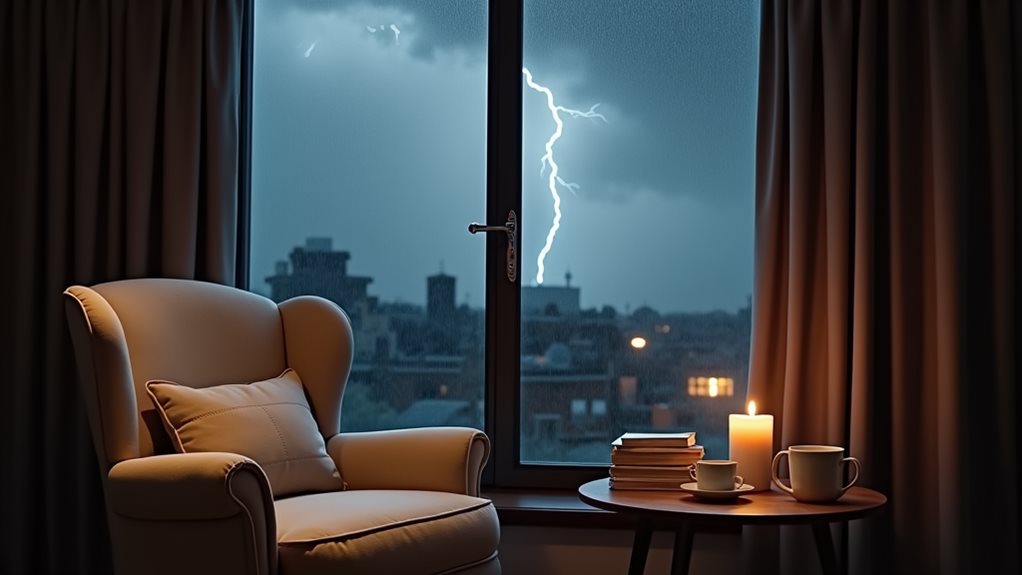
When thunder rumbles ominously in the distance, it can evoke a palpable sense of dread in those with astraphobia. Employing calming techniques is essential for managing this fear.
Deep breathing exercises help stabilize emotions by shifting focus from fear to physical control. Creating a safe space in the home, away from windows, with comforting items like cushions and blankets enhances storm safety and provides a sense of security.
Additionally, listening to calming music or using noise-canceling headphones can drown out the intimidating sounds of the storm, aiding individuals in maintaining calm and regaining a sense of control during thunderstorms.
Continuing Your Journey Toward Fearlessness
Mastering practical tips to stay calm during thunderstorms lays a solid foundation for those affected by astraphobia.
As individuals progress, fostering fear resilience and emotional empowerment becomes pivotal. This journey involves:
- Persistent Practice: Regularly applying learned strategies to real-life scenarios.
- Support Systems: Engaging with therapists and support groups for continuous encouragement.
- Educational Growth: Increasing understanding of weather patterns to demystify thunderstorms.
- Reflection: Analyzing personal growth and setting new goals for further improvement.
This analytical approach not only enhances the strategies in place but also deepens the individual's capacity for handling fear, ultimately leading to a more empowered life.
Frequently Asked Questions
How Common Is Thunderstorm Phobia Among Children Versus Adults?
Thunderstorm phobia, or astraphobia, manifests more frequently in children than adults, reflecting typical childhood fears. Adult anxieties often result from unresolved childhood experiences, emphasizing the need for early intervention and therapeutic support.
Can Pets Also Experience Thunderstorm Phobia?
Pets can indeed experience thunderstorm phobia, manifesting as pet anxiety during storms. Evidence suggests that coping strategies like desensitization and creating a safe space are effective in mitigating anxiety in pets during such events.
What Are the Long-Term Effects of Untreated Thunderstorm Phobia?
Untreated thunderstorm phobia may lead to long-term anxiety and emotional distress. Persistent fear can disrupt daily functioning, heighten stress responses, and exacerbate existing mental health conditions, necessitating effective therapeutic intervention for resolution.
Are There Specific Diets That Help Reduce Anxiety During Storms?
No specific diets directly reduce storm-related anxiety, but incorporating herbal remedies and nutritional supplements might promote overall calmness. Evidence suggests that magnesium and calming herbs like chamomile improve general anxiety management.
How Does Weather Forecasting Technology Impact Thunderstorm Anxiety Management?
Weather forecasting technology, with its improved accuracy, plays a significant role in managing thunderstorm anxiety by allowing individuals to prepare mentally and physically, thereby reducing unexpected stress and aiding in anxiety reduction.
Conclusion
Harnessing hypnosis, harnessing hope, this all-encompassing approach to conquering astraphobia integrates multiple methodologies, effectively empowering individuals. Through Emotional Freedom Techniques and Neuro-Linguistic Programming, sufferers rewire their responses, transforming tumultuous fear into tranquil fortitude. Success stories showcase significant strides, proving that fear's fierce grip can indeed be softened. By blending these therapeutic techniques, those afflicted can markedly mitigate their fear, ultimately revealing a life less interrupted by the uproar of thunderstorms.