


To conquer the fear of flying, innovative therapies like hypnosis, the Emotional Freedom Technique (EFT), and Neuro-Linguistic Programming (NLP) can be highly effective. These treatments explore the subconscious to alter fear responses and rewire thought patterns, offering a state of calm and reducing anxiety through tailored coping mechanisms. By integrating these techniques, individuals gain significant tools to manage flight anxiety confidently and effectively, ultimately fostering a more serene flying experience. Further exploration reveals deeper insights into these transformative strategies.
Key Takeaways
- Hypnosis can reprogram the subconscious, easing the fear of flying by fostering a state of deep relaxation.
- Emotional Freedom Technique (EFT) reduces flying anxiety by tapping on acupressure points while focusing on emotional distress.
- Neuro-Linguistic Programming (NLP) modifies negative thought patterns about flying, replacing them with positive, confident narratives.
- Regular visualization practices help build mental preparedness and confidence by imagining successful, calm flight experiences.
- Implementing mindfulness and progressive relaxation techniques during flights enhances emotional regulation and reduces physiological stress.
Understanding the Roots of Flying Anxiety
Understanding the roots of flying anxiety is essential for developing effective coping strategies. Common fear triggers include turbulence, a perceived loss of control, claustrophobia, and acrophobia. These fears evoke a visceral response that can overwhelm rational thought.
Analyzing these triggers allows for the identification of specific coping mechanisms tailored to individual needs. Techniques such as deep breathing, visualization, and positive affirmations help mitigate these fears by restoring a sense of control and promoting mental calmness.
Engaging with these strategies not only addresses the symptoms but also empowers individuals to manage their anxiety more effectively during flights.
How Hypnosis Can Help You Fly With Ease
Building on the foundation of identifying and managing flying anxiety triggers, hypnosis offers a powerful tool for those seeking to fly with ease. This technique utilizes hypnotic suggestions to tap into the subconscious, facilitating a profound reprogramming of the mind.
It transforms the individual's response to flying from one of fear to one of calm and control.
- Deep Relaxation: Induces a state of profound calm, reducing anxiety.
- Subconscious Reprogramming: Alters deep-seated fears.
- Hypnotic Suggestions: Implants positive affirmations about flying.
- Enhanced Focus: Concentrates the mind on positive outcomes.
- Desensitization: Gradually reduces sensitivity to anxiety triggers.
Tapping Away Anxiety: The Role of EFT

Exploring the role of Emotional Freedom Techniques (EFT) in combating anxiety, this method stands out as a remarkably effective tool for those grappling with a fear of flying.
By employing EFT techniques, individuals tap on specific meridian points on the body while focusing on their emotional distress. This process not only helps in managing acute anxiety but also aids in restoring emotional balance.
The simplicity of EFT allows sufferers to apply it independently, empowering them to regain control during flights. Regular practice can rewire emotional responses to triggers, providing long-term relief and transforming fear into calmness and confidence.
Rewiring Thoughts With NLP for Fearless Flights
While Emotional Freedom Techniques (EFT) provide a hands-on approach to managing fear of flying by tapping into the body's meridian points, Neuro-Linguistic Programming (NLP) offers a complementary pathway that focuses on the mental aspects of this fear.
NLP techniques harness the power of language to reframe and reshape thought patterns associated with flying, facilitating a more positive and controlled emotional state.
- Identifying negative thought patterns to understand personal triggers
- Using positive reinforcement to replace fear-driven narratives
- Visualizing successful flights to build confidence
- Practicing self-dialogue techniques for empowerment
- Rehearsing calm responses to potential flight scenarios for resilience and preparedness
Confidence-Boosting Strategies for Fearful Flyers
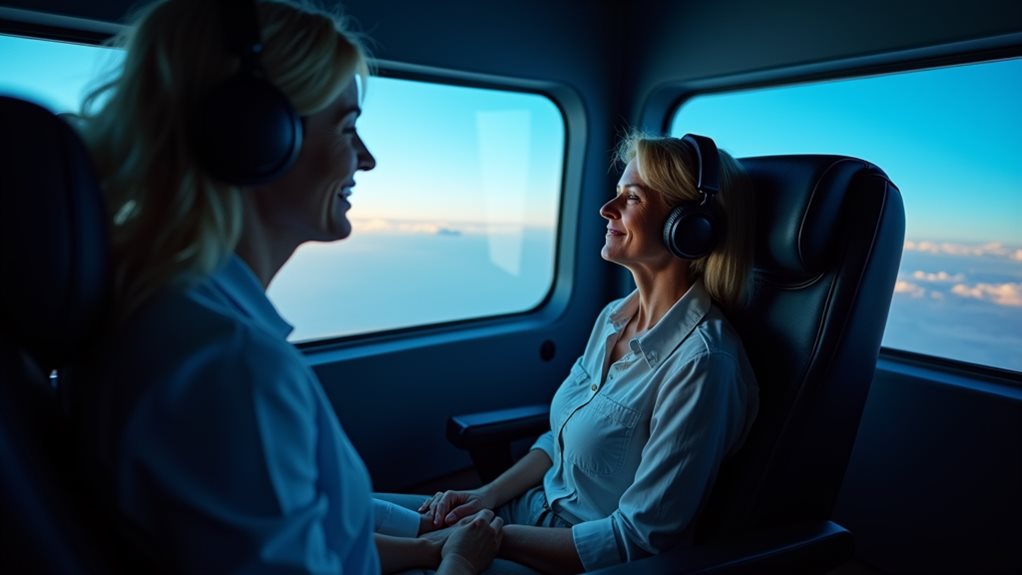
Confidence serves as the cornerstone for overcoming the fear associated with flying. Engaging in confidence exercises and relaxation techniques can profoundly impact one's ability to manage flight anxiety effectively. These strategies enhance individual resilience, equipping fearful flyers with the tools to confront and mitigate their anxieties.
| Technique | Description | Benefit |
|---|---|---|
| Visualization | Imagine successful flights | Increases mental preparedness |
| Deep Breathing | Slow, deep breaths | Reduces physiological anxiety |
| Positive Affirmations | Recite empowering statements | Boosts self-esteem |
| Mindfulness | Focus on the present | Enhances emotional regulation |
| Progressive Relaxation | Tense and relax muscles | Lowers overall stress levels |
These methods collectively foster a supportive psychological environment for travelers.
Addressing the Risks: What You Should Know
Addressing the risks associated with alternative therapies for fear of flying is essential for anyone considering these treatments.
Risk awareness and making informed choices are critical to ensuring safety and effectiveness. Here are key considerations:
- Potential Side Effects: Understand possible adverse reactions or psychological discomfort.
- Efficacy Uncertainty: Not all therapies have equal proof of success; research their effectiveness.
- Individual Differences: Responses to therapy vary; what works for one may not work for another.
- Professional Guidance: Seek advice from qualified professionals.
- Long-Term Impact: Consider both immediate and long-term effects on mental health.
Integrating Traditional and Alternative Therapies

Integrating traditional and alternative therapies offers a thorough approach to managing the fear of flying, potentially enhancing the effectiveness of each method through synergistic effects.
This holistic healing strategy combines cognitive-behavioral techniques with methods such as hypnosis, EFT (Emotional Freedom Techniques), and NLP (Neuro-Linguistic Programming).
By integrating therapies, individuals benefit from a detailed treatment plan that addresses both the psychological and physiological aspects of fear.
The collaborative approach not only alleviates immediate anxiety but also fosters long-term resilience.
Patients are often more receptive to treatment, experiencing a profound transformation in their approach to flying.
Maintaining Progress and Preventing Relapse
While many individuals experience significant progress in overcoming their fear of flying through various therapies, maintaining this progress and preventing relapse is crucial for long-term success.
- Regular Practice: Continuously apply anxiety management techniques like deep breathing and visualization.
- Identify Fear Triggers: Recognize and strategize against specific situations that elevate anxiety.
- Booster Sessions: Periodically revisit therapy sessions to reinforce positive outcomes.
- Support Networks: Engage with groups or counselors who provide emotional support and understanding.
- Mindfulness and Awareness: Stay conscious of emotional states to manage stress proactively before flights.
These steps guarantee the durability of therapeutic gains against the fear of flying.
Frequently Asked Questions
Can Children Undergo These Therapies for Fear of Flying?
Children can undergo adapted therapies for fear of flying. Child-specific approaches guarantee therapies like hypnosis, EFT, and NLP are suitable and effective, focusing on gentle methods that resonate with younger individuals' experiences and perceptions.
How Quickly Can Someone Expect Results From These Therapies?
The speed of results from these therapies varies, depending on individual receptiveness and consistency of practice. Therapy effectiveness is often noticeable within a few sessions, with continuous improvement as techniques are applied consistently.
Are These Therapies Covered by Health Insurance?
Insurance policies vary, often not covering innovative therapies like hypnosis, EFT, and NLP for fear of flying. Patients typically bear therapy costs, necessitating careful financial planning and consideration of therapy affordability and value.
What Are the Long-Term Success Rates of These Therapies?
Long-term success rates of therapies vary, but studies suggest that hypnosis, EFT, and NLP offer substantial long-term benefits. Effectiveness often depends on individual engagement and consistency in applying the techniques learned.
Can These Techniques Be Self-Administered During a Flight?
As a stitch in time saves nine, self-administered techniques like breathing exercises and visualization can be effectively used during flights to manage anxiety, promoting a sense of calm and control over one's fears.
Conclusion
In summary, whether it's harnessing the power of the subconscious through hypnosis, tapping into energy meridians with EFT, or reshaping thought patterns using NLP, these innovative therapies offer new pathways to peace. By integrating these approaches with conventional methods, individuals can enhance their resilience against flying anxiety. As they journey towards overcoming this fear, they not only gain the freedom to fly but also empower themselves with greater confidence and control in all aspects of life.